Contents:
- The Problem: Miami Weddings Break the Usual Florist Rules
- Why Asking the Right Questions Matters
- Step-by-Step: Questions to Ask a Wedding Florist in Miami Before You Book
- Step 1: Can I see full weddings you’ve done, not just close-ups?
- Step 2: Have you worked at my venue, and what did you learn there?
- Step 3: Which flowers will survive my date, my setting and my timeline?
- Step 4: What is your plan for wind and rain at an outdoor ceremony?
- Step 5: How do deposits and payments work?
- Step 6: What does the contract actually cover?
- Step 7: What is your substitution policy?
- Step 8: What’s included in delivery, setup and teardown?
- Step 9: Do you have a minimum spend, and what rentals do you offer?
- Step 10: How do you handle sustainability?
- A Realistic Miami Wedding Flower Budget
- The Eco-Friendly Angle: Sustainable Wedding Flowers in Miami
- Ask about foam-free mechanics
- Choose local and seasonal stems where you can
- Repurpose ceremony flowers
- Donate or share leftovers
- Examples: How Smart Questions Change the Outcome
- The beach ceremony in July
- The indoor Brickell reception
- Using a florist’s ready collection as a starting point
- Troubleshooting: Common Problems and How to Fix Them
- “The quote is way over my budget.”
- “My florist says my favorite flower won’t work.”
- “A storm is in the forecast.”
- “The bouquet started drooping before photos.”
- “I can’t find a florist available on my date.”
- FAQ: Choosing a Wedding Florist in Miami
- How far in advance should I book a wedding florist in Miami?
- What are the best wedding flowers for Miami heat?
- Is a wedding in hurricane season a bad idea?
- How much do wedding flowers cost in Miami?
- How can I make my wedding flowers more sustainable?
Here is the myth I hear most from couples trying to choose a wedding florist in Miami: “Any good florist can do any wedding, so just pick the prettiest Instagram feed.” It sounds reasonable. It is also how peony bouquets end up limp by the first toast and how a beach arch ends up on its side after one gust off the water. A gorgeous feed proves someone can style flowers in a cool studio. It tells you almost nothing about how those flowers behave at 4 p.m. in August on Key Biscayne. So let me set the record straight. Finding the right florist here is really about learning which questions to ask before you book, and then listening closely to the answers. Below you’ll find the exact questions I would bring to every consultation, what a strong answer sounds like, a realistic budget, and the eco-friendly choices that actually hold up in South Florida.
The Problem: Miami Weddings Break the Usual Florist Rules
Most wedding planning advice is written for a mild spring day in a ballroom. Miami does not cooperate with that script. Summer highs sit around 90°F with humidity that regularly tops 70 percent, and an outdoor ceremony can feel ten degrees hotter in direct sun. Cut flowers lose water through their petals and leaves faster in those conditions, and some varieties simply give up.
Then there is the wind. A beach ceremony in Miami Beach or Sunny Isles almost always comes with a steady onshore breeze, and gusts of 15 to 20 mph are common. Tall, top-heavy pedestals and loose aisle petals become a hazard rather than a decoration.
And then the calendar. Atlantic hurricane season runs from June 1 through November 30. Most weekends in that window are perfectly fine, but a tropical storm can disrupt flower shipments, close venues, or push a wedding back a week. Your florist needs a plan for that, in writing.
Finally, many of the flowers couples fall in love with on Pinterest, like garden peonies and blue hydrangeas, are among the least heat-tolerant stems you can choose. A florist who knows the city will tell you this up front. One who doesn’t may happily take your order and leave you to find out on the day.
Why Asking the Right Questions Matters
Flowers usually land somewhere between 8 and 10 percent of a wedding budget, and they are one of the few line items that physically changes over the course of the day. Your venue will look the same at 11 p.m. as it did at noon. Your centerpieces will not, unless someone planned for that.
The right questions do three things. First, they reveal real experience, because a florist who has worked outdoor Miami events will answer heat and wind questions instantly and specifically. Second, they protect your money, since deposits, cancellation terms and substitution clauses are where most disputes start. Third, they set expectations, so you’re not surprised by delivery fees, rental returns or a 2 a.m. teardown charge.
Think of the consultation as a job interview where you are the one hiring. You don’t need to know floristry. You need to know what to ask and what a confident answer sounds like.
Step-by-Step: Questions to Ask a Wedding Florist in Miami Before You Book
Work through these in order. I’ve grouped them the way a consultation naturally flows, from creative fit to logistics to the fine print.
Step 1: Can I see full weddings you’ve done, not just close-ups?
Close-up bouquet shots are lovely, but ask for photos of complete events: the ceremony space, the reception tables, the bouquets in the hands of a bridal party. Better still, ask for a few weddings at venues similar to yours. If your ceremony is on the sand, you want to see beach work. If you’re in a Coral Gables garden or a Brickell rooftop, ask for that.
Look for consistency. Do the arrangements look as fresh in the reception photos as they did in the ceremony shots? That’s a quiet signal of good conditioning and smart flower choices.
Step 2: Have you worked at my venue, and what did you learn there?
This is my favorite question because the answer can’t be faked. A florist who has worked a venue will mention things like freight elevator hours, whether the loading dock is shaded, how early the room opens, and whether the planner allows open flames near greenery. If they haven’t worked there, ask whether they’ll do a site visit and whether that visit is included or billed separately.
Step 3: Which flowers will survive my date, my setting and my timeline?
Here is where Miami expertise shows. A strong answer separates heat-tolerant stems from fragile ones and suggests swaps without losing your look.
Flowers that handle Miami heat well:
- Anthuriums: glossy, sculptural and remarkably tough, often lasting two to three weeks as cut flowers. You can see how they work in finished bouquets at https://mypeonika.com/collections/anthuriums-bouquet.
- Orchids: dendrobiums, cymbidiums and phalaenopsis hold up beautifully in warm, humid air.
- Tropicals: birds of paradise, heliconia, ginger and protea, plus foliage like monstera and palm.
- Callas and spray roses: sturdier than they look, especially when kept hydrated until the last minute.
Flowers that need careful handling or shade:
- Peonies: stunning, but they open fast and can shatter in heat. Great for indoor receptions, risky for a noon beach ceremony.
- Hydrangeas: they drink through their petals and can wilt within an hour in direct sun.
- Gardenias and lily of the valley: bruise and brown easily.
- Ranunculus and anemones: fine in air conditioning, but delicate outdoors for long stretches.
Good follow-ups: “Where would you put the delicate flowers, and where would you put the tough ones?” and “How long can the bridal bouquet stay out of water?” A thoughtful florist might suggest peonies for the reception centerpieces and anthuriums or orchids for the ceremony arch, so you get the romance and the resilience.
Step 4: What is your plan for wind and rain at an outdoor ceremony?
Ask how they weight arch installations and aisle pieces, whether they use low, wide arrangements on the sand, and what happens to petal aisles in a breeze. Then ask the hurricane-season question directly: “If a named storm forces us to postpone, what happens to my deposit and my order?” You want to hear about rescheduling windows, how far in advance a date can move, and whether any flowers already purchased are credited.
Step 5: How do deposits and payments work?
Policies vary widely, so ask for specifics. Typical arrangements across the industry include a retainer of 25 to 50 percent to hold the date, with the balance due two to four weeks before the wedding. Ask whether the retainer is refundable, whether payments can be split, and which payment methods carry a fee.
Step 6: What does the contract actually cover?
Read it before you sign, and look for these items:
- An itemized list of every piece, with flower types, colors and quantities.
- Delivery address, arrival time and the name of the on-site contact.
- Cancellation and postponement terms, including weather.
- Who owns rented vases, stands and arch frames, and when they must be returned.
- A final headcount or change deadline.
Vague contracts that say “ceremony florals” without detail are a red flag. You should be able to picture every arrangement from the document alone.
Step 7: What is your substitution policy?
Flowers are an agricultural product. Crops fail, shipments get delayed, and storms close airports. A professional will reserve the right to substitute, but the contract should say how: same color family, same value, and ideally with a heads-up before the wedding week. Ask, “If you can’t get my garden roses, what would you use instead?” A specific answer is reassuring. A shrug is not.
Step 8: What’s included in delivery, setup and teardown?
Some florists drop off arrangements and leave. Others stay to install the arch, pin boutonnieres and move ceremony pieces to the reception. Ask what’s included, what costs extra, and what time teardown happens. Late-night breakdowns after an 11 p.m. send-off often carry a separate fee, and many venues require rentals out the same night.
Step 9: Do you have a minimum spend, and what rentals do you offer?
Many full-service florists set a wedding minimum, sometimes several thousand dollars for peak Saturdays. That’s not a bad thing; it just means you should ask early. Also ask what they rent (vases, candleholders, arches, hoops, risers) versus what you’d need to source elsewhere.
Step 10: How do you handle sustainability?
This question tells you a lot about a florist’s craft. More on what to listen for in the eco section below.
A Realistic Miami Wedding Flower Budget
Every wedding is different, but couples need a starting number. These are typical US estimates for a wedding of around 100 guests, and Miami pricing often sits near the middle to upper end because of import costs and peak-season demand.
- Bridal bouquet: about $150 to $350
- Bridesmaid bouquets: about $65 to $125 each
- Boutonnieres and corsages: about $20 to $45 each
- Ceremony arch or backdrop: about $800 to $3,000+
- Aisle arrangements: about $75 to $200 each
- Reception centerpieces: about $85 to $300 each, depending on height and flower choice
- Delivery, setup and teardown: roughly $150 to $500+
Put together, many couples land somewhere between $2,500 and $8,000 total, with large installations pushing well past that. These are estimates, not quotes, so use them to sanity-check proposals rather than to negotiate.
For concrete reference points, My Peonika publishes its wedding pricing online, which is refreshingly rare. Bridal bouquets there range from “Playa Blanca” at $110 to $173, through “Here & Now” with ranunculus, roses and anthuriums at $179, “The One” with hydrangeas, stock and peony roses at $180, and “Pure Devotion” with anthurium, ranunculus, amaranth and lisianthus at $219, up to “Flawless Harmony” in orchids, amaranth and roses at $275 and the “Rare Beauty” bridal bouquet at $330. Wedding sets run from $160 to $6,930, and a wedding arch from $1,500 to $2,500. Seeing real numbers like these makes it far easier to judge whether a quote elsewhere is fair.
The Eco-Friendly Angle: Sustainable Wedding Flowers in Miami
Weddings can generate a surprising amount of floral waste. The good news is that the most sustainable choices are often the most practical ones in a hot climate.
Ask about foam-free mechanics
Traditional green floral foam is made from plastic resin and breaks down into microplastics that don’t decompose. Many florists now build with chicken wire, reusable pin frogs (kenzans), moss, water tubes and reusable grids instead. Ask, “Do you use floral foam, and if so, where?” A florist who has moved away from it will be happy to explain their mechanics.
Choose local and seasonal stems where you can
Florida grows a lot of foliage. Leatherleaf fern, palms, ti leaves and many tropical greens come from in-state growers, and Homestead-area nurseries supply plenty of tropical plants. Building your design around local greenery and heat-loving tropicals can cut transport miles and improve vase life at the same time. Imported roses and peonies are still beautiful options; just use them where they’ll shine longest. Even florists who import, as My Peonika does with stems from the Netherlands, Ecuador, Kenya and Colombia, can help you balance those flowers with sturdy local greenery, so ask how they’d mix the two for your date.
Repurpose ceremony flowers
This is the easiest win on the list. Aisle arrangements can become reception centerpieces. Arch clusters can flank the sweetheart table. Bridesmaid bouquets can sit in bud vases on the head table or the cake table. Ask your florist whether moving pieces between spaces is included and how much time their team needs.
Donate or share leftovers
Ask whether your florist can help get arrangements to a hospice, senior living community or hospital after the event, or whether guests can take centerpieces home. Some facilities have rules about what they accept, so check ahead. Anthuriums and orchids are ideal here because they keep looking good for days after the party ends.
Examples: How Smart Questions Change the Outcome
The beach ceremony in July
Picture a sunset ceremony in Miami Beach with 80 guests and a blush-and-white palette. The couple wants peonies everywhere. A florist who knows the climate suggests a compromise: an arch built on orchids, white anthuriums and palm, weighted with sandbags hidden in the base, plus low aisle clusters instead of tall shepherd’s hooks. The peonies move to air-conditioned reception tables where they can open slowly. The look stays romantic, and nothing wilts in photos.
The indoor Brickell reception
Now picture a February wedding in a climate-controlled ballroom. Here peonies, ranunculus and hydrangeas are fair game. The smarter questions shift to logistics: elevator access, how early the florist can load in, and whether tall centerpieces block sightlines for toasts.
Using a florist’s ready collection as a starting point
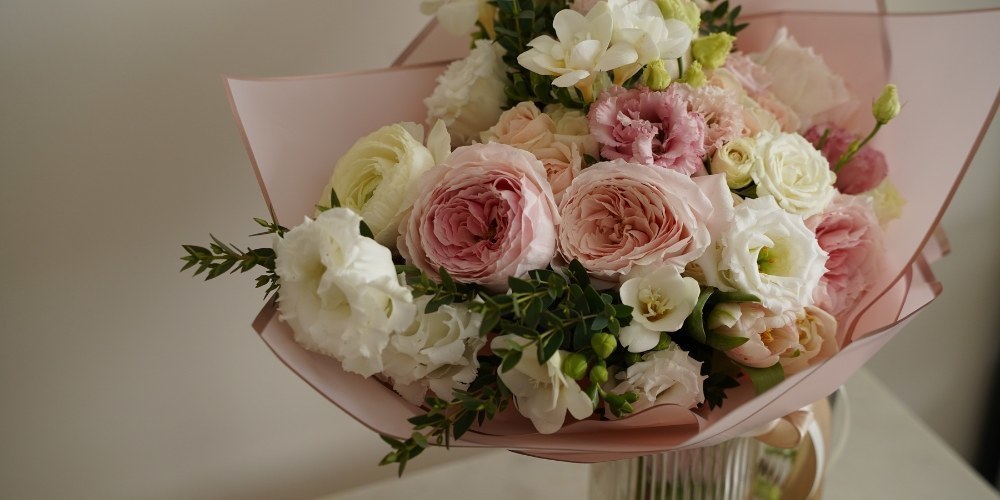
One thing I appreciate about My Peonika is that you can browse finished wedding bouquets with names, stems and prices before you ever pick up the phone. For couples comparing wedding florists in miami, their bridal collection is a useful benchmark: it includes heat-smart designs that already pair delicate blooms with sturdier ones, like “Here & Now” mixing ranunculus with anthuriums. That makes a great conversation starter: show the bouquet you like, then ask how to adapt it for your venue and season.
If tropical texture is your style, their anthurium designs are worth a look. Pieces like “Island Majesty,” which pairs roses, anthuriums and birds of paradise, show how well these flowers suit Miami’s tropical setting, and the anthuriums themselves can last up to two to three weeks.
A few other details stand out to me. My Peonika works from a studio in Hallandale Beach and delivers across Miami-area neighborhoods including Coral Gables, Miami Beach, Brickell, Coconut Grove and Aventura. Wedding delivery is scheduled at a time you arrange with a manager by phone or online, and pickup is available too. Their florists assemble bouquets shortly before delivery, which matters a lot in this heat. They also carry peonies year-round when in stock, so ask about availability for your date rather than assuming they’re out of season.
Because their wedding and event sets are not available same-day, plan ahead. And since their published materials don’t spell out deposit, contract or on-site setup terms, bring the questions from this guide to your conversation with them, just as you would with any florist.
Troubleshooting: Common Problems and How to Fix Them
“The quote is way over my budget.”
Ask the florist to price two versions: your dream design and a pared-back one. The biggest savings usually come from fewer large installations, more greenery, repurposing ceremony pieces, and using sturdy tropicals in place of premium imported blooms. Cutting a few centerpieces rarely changes the room as much as you’d fear.
“My florist says my favorite flower won’t work.”
That’s often a good sign. Ask what they’d substitute and request a photo. Garden roses can stand in for peonies, and white lisianthus can echo the softness of hydrangeas while handling heat better. If you can’t let go, keep the fragile flower in your bouquet only, where it spends most of its time in air conditioning.
“A storm is in the forecast.”
Call your florist and planner together. Confirm the rain plan, whether the ceremony moves indoors, and whether any installation needs to shrink. This is when that contract clause about postponement earns its keep.
“The bouquet started drooping before photos.”
Keep bouquets in water and in shade until the last possible moment. Ask your florist to deliver as close to ceremony time as the schedule allows and to leave a bucket of water at the getting-ready location. A wrapped bouquet left on a hot car seat for 30 minutes is a common culprit.
“I can’t find a florist available on my date.”
Peak Saturdays in the dry season, roughly December through April, book up fast. Contact florists early, consider a Friday or Sunday, and ask whether they offer pre-designed wedding sets that need less custom planning. My Peonika, for example, lists ready-made wedding sets from $160 up to $6,930, which can be a practical route for a smaller celebration or a courthouse wedding followed by dinner.
FAQ: Choosing a Wedding Florist in Miami
How far in advance should I book a wedding florist in Miami?
Many couples reach out six to twelve months ahead for full-service weddings, especially for winter and spring dates. Smaller orders like bouquets and boutonnieres can often be arranged later, but they still shouldn’t be left to the final week.
What are the best wedding flowers for Miami heat?
Anthuriums, orchids, birds of paradise, heliconia, protea, callas and sturdy greenery perform best outdoors. Save peonies, hydrangeas and gardenias for air-conditioned spaces or keep them in water until the last minute.
Is a wedding in hurricane season a bad idea?
Not at all, but plan for it. Choose an indoor backup, buy wedding insurance, and make sure your florist’s contract explains what happens if a storm forces you to postpone.
How much do wedding flowers cost in Miami?
As a rough estimate, many couples spend $2,500 to $8,000 for a 100-guest wedding. Individual bridal bouquets often fall between $150 and $350; at My Peonika, published bridal bouquet prices range from $110 to $330.
How can I make my wedding flowers more sustainable?
Ask for foam-free mechanics, lean on local greenery and seasonal stems, move ceremony arrangements to the reception, and arrange to donate or share leftovers after the event.